Understanding the Great Wildebeest Migration Map: Month-by-Month Migration Route Through Serengeti and Masai Mara
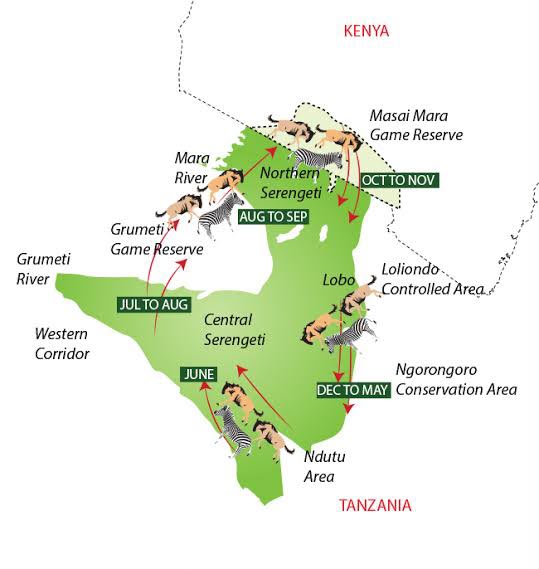
Understanding the Great Wildebeest Migration Map: Month-by-Month Migration Route Through Serengeti and Masai Mara
The Great Wildebeest Migration is one of the most spectacular wildlife events on Earth. Every year, more than two million wildebeest, accompanied by hundreds of thousands of zebras and gazelles, travel across the vast plains of Tanzania’s Serengeti National Park and Kenya’s Masai Mara National Reserve in search of fresh grazing and reliable water sources. This remarkable journey covers approximately 800 to 1,000 kilometers and follows a natural cycle driven by seasonal rainfall rather than a fixed schedule.
For many travelers, understanding the migration map before planning a safari makes all the difference. The migration is constantly moving, meaning that choosing the right destination depends largely on the month you intend to travel. While wildlife can be seen throughout the Serengeti all year, witnessing the migration at its peak requires careful planning.
This guide explains the migration route month by month, helping you understand where the herds are likely to be, what wildlife experiences you can expect during each season, and the best time to visit each region.
How the Great Migration Works
Unlike many people believe, the Great Migration is not simply a movement from Tanzania into Kenya. Instead, it is a continuous circular journey that repeats every year. The animals follow the rains, moving towards areas where fresh grass has grown after seasonal showers. If rainfall patterns change, the migration can shift slightly, but the overall route remains relatively consistent.
The migration is led primarily by wildebeest, while zebras often travel ahead because they eat the taller grasses first. Gazelles follow behind, feeding on shorter and more nutritious grass that remains. Predators such as lions, leopards, cheetahs, hyenas, crocodiles, and wild dogs closely follow the migration, making every stage of the journey an exciting wildlife experience.
December to March: Southern Serengeti and Ndutu Calving Season
According to the migration map, from December through March, the herds gather across the Southern Serengeti plains and the Ndutu area, located within the Ngorongoro Conservation Area.
This is one of the most beautiful periods of the migration. Short seasonal rains transform the plains into lush green grasslands rich in nutrients, providing ideal conditions for pregnant wildebeest.
Between late January and February, approximately 500,000 wildebeest calves are born within just a few weeks. This synchronized calving strategy increases the survival chances of newborns by overwhelming predators with sheer numbers.
During this period visitors may witness:
- Thousands of newborn wildebeest calves taking their first steps
- Large family herds stretching across endless plains
- Lions hunting vulnerable calves
- Cheetahs chasing young antelope
- Hyenas patrolling calving grounds
- Excellent opportunities for birdwatching
- Beautiful green landscapes ideal for photography
Because predator activity is extremely high, many wildlife documentaries are filmed during this season.
Wildlife Highlights
- Wildebeest calving
- Zebra foals
- Lion prides
- Cheetahs
- Hyenas
- Jackals
- Secretary birds
- Ostriches
- Elephants
This season is perfect for photographers, families, wildlife enthusiasts, and travelers who enjoy dramatic predator-prey interactions.
April to May: Moving North Through Central Serengeti
As the rainy season continues, the grass in the south begins to disappear. The massive herds gradually move northwest toward Central Serengeti.
Although April and May are often considered the rainy months, they are among the quietest periods for tourism, meaning visitors enjoy fewer safari vehicles and a more exclusive experience.
During these months, enormous columns of wildebeest can often be seen stretching for several kilometers as they move through valleys and open plains.
Central Serengeti offers excellent resident wildlife including:
- Lions
- Leopards
- Cheetahs
- Elephants
- Buffaloes
- Giraffes
- Hippos
- Crocodiles
The Seronera Valley remains productive throughout the year because permanent rivers provide water even when other regions become dry.
What to Expect
- Long migration columns
- Dramatic skies during rainy season
- Green scenery
- Excellent predator sightings
- Fewer tourist vehicles
- Lower accommodation rates
June: Central Serengeti Towards the Western Corridor
By June, the long rains begin to end, and the migration starts heading toward the Western Corridor.
The herds become increasingly concentrated as they prepare for one of the migration’s first major challenges.
This stage provides spectacular game viewing because predators know the migration must pass through predictable routes.
Visitors often witness:
- Massive dust clouds raised by thousands of animals
- Lions waiting near migration paths
- Hyenas competing over kills
- Large elephant herds
- Cheetahs hunting Thomson’s gazelles
June marks the beginning of the dry season, offering pleasant weather with cool mornings and sunny afternoons.
July to August: Western Corridor and Grumeti River Crossings
During July and early August, the migration reaches the Western Corridor and the Grumeti River.
Although the Grumeti River is smaller than the Mara River, it presents one of the first dangerous river crossings of the migration.
Large Nile crocodiles wait patiently beneath the water, while confusion among thousands of wildebeest creates dramatic scenes as animals hesitate before jumping into the river.
Not every crossing involves crocodile attacks, but the uncertainty makes every crossing unforgettable.
Besides river crossings, visitors enjoy:
- Huge wildebeest herds
- Zebra migrations
- Crocodiles
- Hippos
- Lions following the migration
- Leopard sightings
- Excellent photography
This period is ideal for travelers looking to experience the excitement of river crossings before the crowds reach northern Serengeti.
August to September: Northern Serengeti and Mara River Crossings
The migration map shows the herds reaching the Northern Serengeti between August and September.
This is the most famous stage of the Great Migration.
The Mara River crossing has become one of Africa’s most iconic wildlife spectacles.
Crossings are unpredictable. Sometimes animals gather for hours before crossing. Other times they cross immediately without warning.
When they decide to cross, thousands of wildebeest throw themselves into the river almost simultaneously.
The crossing is filled with danger:
- Powerful river currents
- Steep riverbanks
- Nile crocodiles
- Waiting lions
- Hyenas nearby
Despite these dangers, the instinct to reach greener grass drives the migration forward.
Wildlife Highlights
- Mara River crossings
- Nile crocodiles
- Hippos
- Lions
- Leopards
- Cheetahs
- Black-backed jackals
- Vultures
Northern Serengeti also offers beautiful rolling hills, river forests, and fewer crowds compared to Kenya’s Masai Mara.
October to November: Masai Mara and Return Journey
By October, many herds remain in Kenya’s Masai Mara while others begin moving back into Tanzania.
As short rains begin in the southern Serengeti, fresh grass starts growing again.
The migration slowly turns south, beginning another chapter of its annual cycle.
Visitors during October and November often enjoy:
- Large herds spread across Northern Serengeti
- Excellent predator sightings
- Beautiful golden landscapes
- Comfortable temperatures
- Lower visitor numbers than peak season
This transition period offers fantastic wildlife viewing while avoiding the busiest safari months.
Month-by-Month Migration Summary
| Month | Main Migration Location | What to See |
|---|---|---|
| January | Ndutu & Southern Serengeti | Pregnant herds, green plains, predators |
| February | Ndutu | Calving season, newborn wildebeest, lions and cheetahs |
| March | Southern Serengeti | Calves growing, predator action |
| April | Central Serengeti | Large moving herds, lush scenery |
| May | Central Serengeti | Migration columns, fewer tourists |
| June | Central Serengeti to Western Corridor | Dry season begins, concentrated wildlife |
| July | Western Corridor & Grumeti River | Grumeti River crossings, crocodiles |
| August | Northern Serengeti | Mara River crossings begin |
| September | Northern Serengeti | Peak river crossing season |
| October | Northern Serengeti & Masai Mara | Excellent game viewing and predators |
| November | Northern Serengeti heading south | Return migration begins |
| December | Southern Serengeti & Ndutu | Fresh grazing, migration cycle restarts |
What to See During Each Safari Season
Calving Season (January to March)
This is the best time to witness new life in the Serengeti. Thousands of calves are born every day, attracting lions, cheetahs, hyenas, and jackals. The landscapes are lush and green, making this an excellent season for photography and family safaris.
Green Season (April to May)
Although rainfall is more frequent, this period offers fewer visitors, beautiful scenery, excellent birdwatching, and outstanding predator sightings. It is also one of the best times for travelers seeking value, as many lodges offer attractive seasonal rates.
Dry Season (June to October)
The dry season is considered the classic safari period. Wildlife gathers around rivers and waterholes, vegetation becomes thinner, and animals are easier to spot. The Grumeti and Mara River crossings usually occur during this period, providing some of Africa’s most dramatic wildlife moments.
Short Rains and Return Migration (November to December)
As fresh grass begins to grow in the south, the migration gradually returns to Southern Serengeti and Ndutu. Wildlife remains abundant, visitor numbers are lower than during peak season, and photographers often enjoy dramatic skies and vibrant landscapes.
Choosing the Best Time for Your Safari
Every stage of the Great Migration offers something unique. Travelers hoping to witness newborn calves should visit between January and March. Those dreaming of dramatic river crossings should plan their safari between July and September, while visitors seeking quieter parks and excellent value may prefer April, May, November, or early December.
Regardless of the month, the Serengeti ecosystem provides exceptional wildlife viewing throughout the year. Even when the migration is moving through another region, resident animals such as lions, elephants, giraffes, buffaloes, leopards, cheetahs, and countless bird species ensure every safari is rewarding.
At Wakati Safaris Adventure, we carefully plan each itinerary according to the seasonal movement of the migration. By matching your travel dates with the most active areas of the Serengeti ecosystem, we maximize your chances of witnessing unforgettable wildlife encounters. Whether your dream is watching thousands of wildebeest crossing the Mara River, photographing newborn calves on the Ndutu plains, or experiencing the endless herds stretching across the Serengeti, our experienced safari specialists will help you choose the right destination at the right time, ensuring a memorable Tanzanian safari that you will treasure for a lifetime.
Ready for Your Tanzania Adventure?
Tell us where you want to go, your travel dates and your budget. Wakati Safaris Adventure will help you plan a safari, Kilimanjaro climb or Zanzibar holiday that fits you well.
